
Inside an EPP Day: The Highest-Pressure Shoot in Football
Before a FIFA World Cup begins, every squad passes through an EPP day — the media production day on which the tournament's entire visual identity for that team is captured. The portraits on the broadcast graphics, the player moves shown before kickoff, the interview material that feeds features for the next six weeks: it is all made in one session.
There are no reshoots. The players do it once, the tournament begins, and whatever was captured is what the world sees. At the 2026 World Cup, PUP Creative founder Pat Ulloa filmed on the Colombia EPP day as the team's embedded FIFA crew cameraman. The pressure is not implied — it is stated. Crews are told beforehand, plainly: you need to get it right.
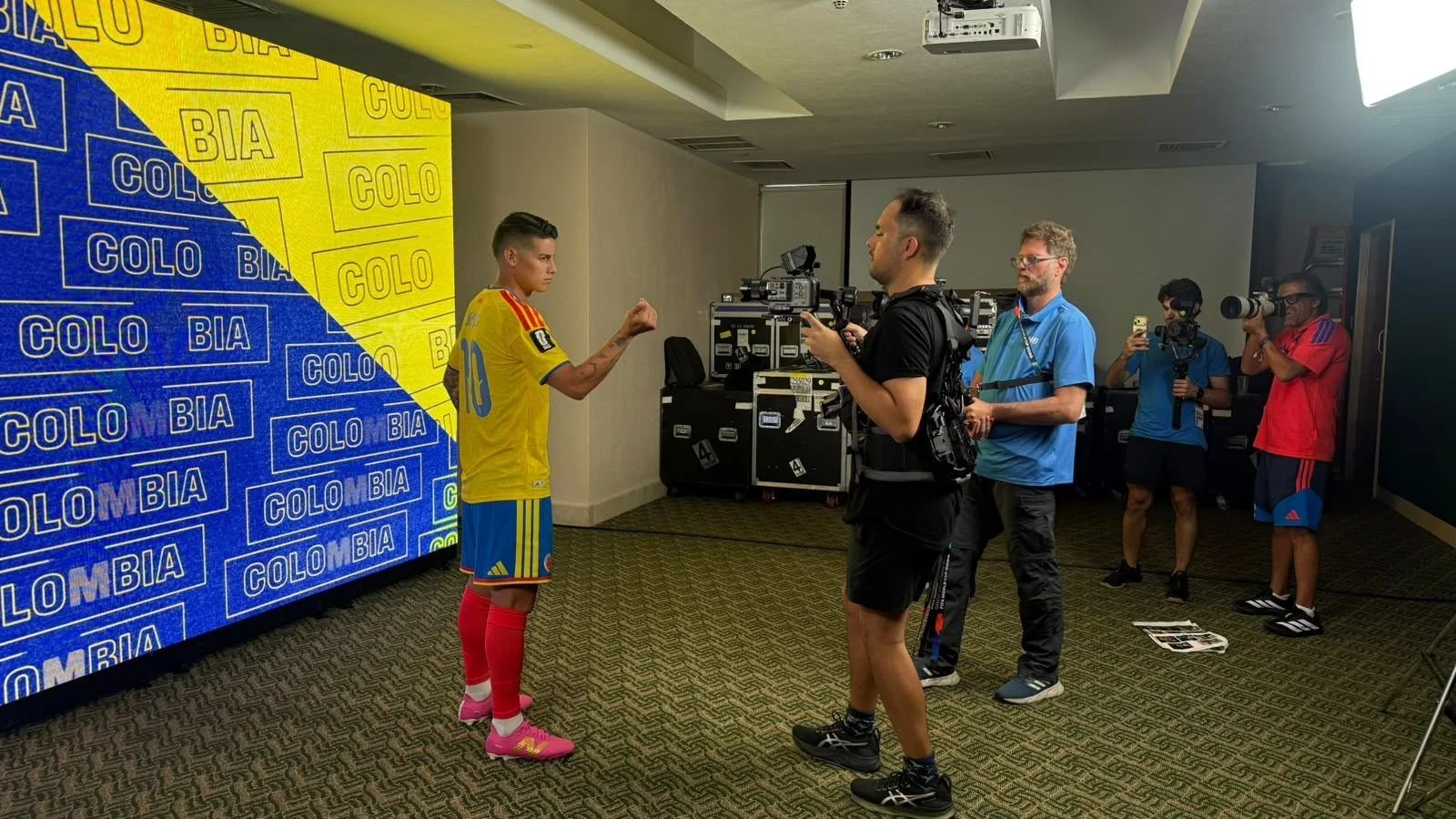
One Session, Zero Margin
An EPP day compresses everything difficult about major event production into a few hours. An entire squad cycles through stations on a fixed schedule. Each player gives the camera a few minutes at most. Lighting, framing, and direction have to be resolved before the first player walks in, because the schedule will not pause for adjustments.
The discipline it demands is preparation so complete that execution becomes routine. Every camera position tested. Every eventuality — the player who rushes, the one who needs drawing out, the schedule that compresses further — already thought through. Under genuine pressure, crews do not rise to the occasion; they fall back on their preparation. EPP days simply make that truth visible.
Directing Athletes in Minutes, Not Hours
A squad is not a cast. Some players enjoy the camera; others treat it as an obligation between training sessions. The crew gets minutes to read each personality and pull something usable from it — energy from one, stillness from another — while keeping the machine moving.
This is where experience across hundreds of athlete shoots compounds. Knowing when a small joke relaxes a subject and when silence works better. Knowing that the throwaway moment between takes — a laugh, a glance at a teammate — is often the frame the editors will actually use. The craft of athlete-focused filming is largely the craft of making short windows feel unhurried.
Why the Stakes Are Genuinely High
EPP material is not internal content. It feeds FIFA's global broadcast package — the visuals hundreds of millions of viewers see around every match. A soft focus or a flat portrait does not get quietly fixed later; it gets broadcast, repeatedly, for the length of the tournament.
Working under that weight recalibrates a crew's relationship with pressure. After a shoot in which an entire nation's World Cup imagery depended on getting it right the first time, a compressed timeline on a commercial project stops registering as pressure at all. That recalibration is one of the most transferable assets a production partner can bring to any event or campaign.
The Transfer to Every Other Shoot
Most organisations will never run an EPP day, but every organisation runs shoots where time with talent is short and the output has to be right: a CEO with fifteen minutes, an athlete ambassador between commitments, a sponsor activation with one take at the key moment.
The formula holds at every scale. Prepare until execution is routine. Read the person, not just the shot list. Treat the short window as the format, not the obstacle. That is what the highest-pressure shoot in football teaches — and it is a standard that, once learned, applies everywhere.