
Filming Training When Nobody Tells You What Happens Next
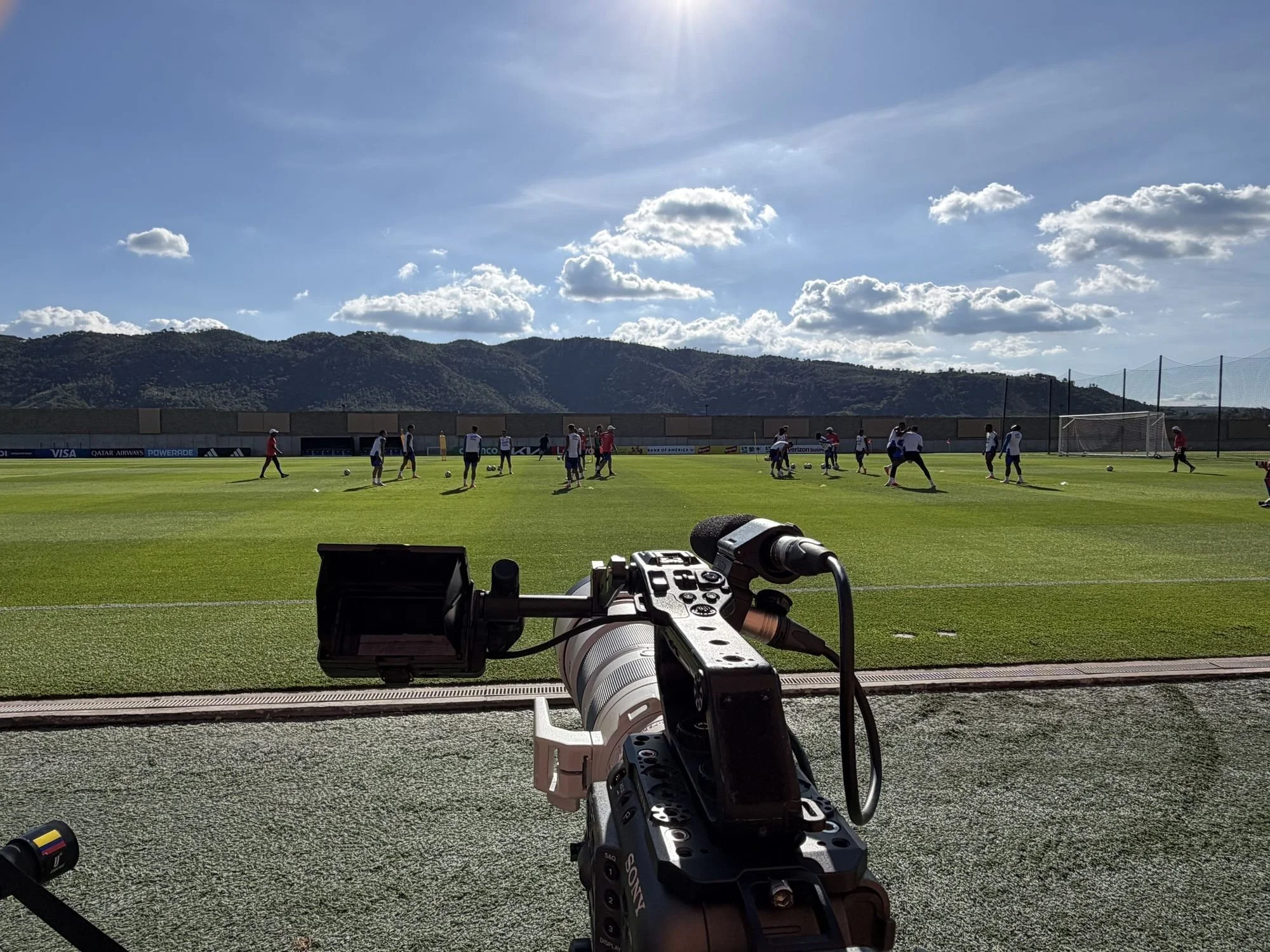
Of everything filmed across five weeks embedded with the Colombian national team at the 2026 FIFA World Cup, training sessions were the purest test of a camera operator's judgement.
Here is the reality of filming elite training: nobody briefs the crew on what the session will contain. There is no run sheet. The coaching staff design sessions for footballing reasons, not filming ones, and the crew's window is limited. Whatever happens, happens once, at full speed, somewhere on a large pitch — and the operator either reads it or misses it.
PUP Creative founder Pat Ulloa filmed every Colombia training session of the tournament. The discipline that role demands has a name inside the trade: head on a swivel.
The Session Doesn't Care About Your Shot List
A training ground rewards awareness over planning. The temptation is to lock onto the marquee players — the names, fifty or sixty metres away, doing what marquee players do. But the session's most valuable moment is rarely where the biggest name is standing.
It might be the coaching staff in a huddle two metres from the camera, deep in a tactical conversation — the shot almost everyone forgets to take because they are watching the stars instead. It might be a young player's reaction to a senior teammate's instruction, or a goalkeeper coach's drill that visualises the next match's game plan. The operator who pans past these hunting the famous face returns with footage everyone already has. The experience that major events build is largely this: knowing that meaning is usually beside the action, not inside it.
Switched On Is a Physical Discipline
Staying genuinely alert for a full session — tracking multiple groups, listening for changes in intensity, watching the periphery while holding a frame — is fatiguing in a way that scripted production never is. Concentration is the actual skill. The moment attention drops is reliably the moment something happens.
This cannot be faked or fixed in the edit. Editors can only cut what was captured, and at elite training, capture is a function of readiness. Crews conditioned by controlled environments — where someone calls action and the subject repeats on request — consistently under-deliver in these settings, not through lack of talent but through lack of conditioning.
Restraint Is Part of the Job
An embedded crew at training also operates inside a trust relationship. Some of what happens on a training pitch is competitively sensitive; some of it is simply not the crew's to use. Judgement about what to film, what to hold, and how to be present without intruding is what keeps the access alive week after week.
That judgement is invisible in a showreel but decisive in practice. It is why teams and federations grant some crews deep access and hold others at the perimeter — and why the most valuable behind-the-scenes and athlete content comes from operators the environment has learned to trust.
What This Means for Clubs and Brands
Any organisation filming real sporting environments — a club documenting a season, a brand capturing its sponsored athletes in their actual work — is buying the training-ground skill set whether it realises or not: awareness, readiness, restraint, and the eye for the moment beside the action.
Ask a prospective production partner where they learned to film the unscripted. The answer determines what comes back from the shoot. Some crews wait for moments to be arranged. The valuable ones catch the moments nobody arranged — which, in sport, are the only ones that matter.